
Assessing the mold resistance of bio-based materials using a Froilaboincubator.
As the construction industry increasingly turns to sustainable, bio-based materials, understand their durability and long-term performance has become essential. Materials such as wood, hemp, and straw offer strong environmental benefits but are naturally sensitive to moisture. This makes them more vulnerable to fungal contamination, and in particular mold.
Mold growth can compromise both the structural integrity of these materials and the quality of indoor environments. Assessing and improving mold resistance is therefore a key step in ensuring that bio-based construction materials can be used safely and reliably.
The main types of tests used to assess the quality of construction materials in regard to mold are:
Sensitivity tests: These tests are carried out under controlled environmental conditions to determine whether a material supports mold growth.
Real-conditions tests: These tests simulate the environmental conditions encountered in actual building use, with moisture serving as the key factor promoting mold growth.
Durability tests: These tests are carried out on treated bio-based materials to verify the long-term performance and reliability of protective treatments in limiting mold growth.
CSTB (www.cstb.fr) is a French company that performs standardized testing to assess both the inherent susceptibility of construction materials to fungal growth and their performance under humid conditions. As part of this work, CSTB utilized Froilabo incubators to create the controlled temperature environments required for reliable fungal-resistance and durability testing. Further information on this testing can be found in the further reading section.
In this technical note we aim to identify bio-based materials with adequate resistance to mold growth. To achieve this, we used a Froilabo incubator which provided stable and precise temperature control throughout the testing period.
Method
Fungal attack tests are used to assess how constructive materials respond when exposed to conditions that favour mold development. In these tests, samples are placed in contact with a known consortium of mold strains (filamentous fungi) under tightly controlled temperature and humidity. The regulatory standards governing these procedures are listed in the further reading section.
Sample preparation: Mold spores such as Aspergillus niger, Penicillium funiculosum, and Chaetomium globosum are first cultured onto petri dishes. These cultures are maintained in a Froilabo refrigerated incubator (model BRE 60L) which ensures a stable temperature of 37oC regardless of ambient room conditions. Culturing the molds on petri dishes allows the fungal load to be quantified, ensuring that a controlled and reproducible number of spores is applied to each material sample.
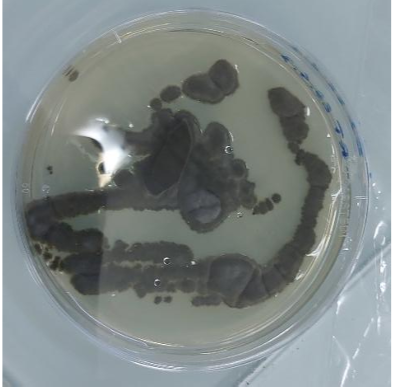
Image 1: Mold cultured on petri dishes used to determine the fungal load.
Once prepared, the fungal cultures are collected and used to inoculate the test materials. Samples are incubated for 4 to 8 weeks at 28oC and 95% relative humidity – conditions that strongly promote fungal development. This controlled environment enables a reliable assessment of how each material responds to sustained mold exposure.
To evaluate the action of microorganisms, the material is incubated with mold spores (e.g. Aspergillus niger, Penicillium funiculosum, Chaetomium globosum) for 4 to 8 weeks at a temperature of 28 °C and a very high relative humidity of 95%.
Materials tested: The bio-based materials most commonly evaluated include:
- Insulation materials: wood fiber, hemp fiber, cellulose wadding, straw bales
- Construction and finishing materials: wood, raw earth bricks, cork
Below are examples of wood fiber and cellulose insulation samples used for this type of testing.
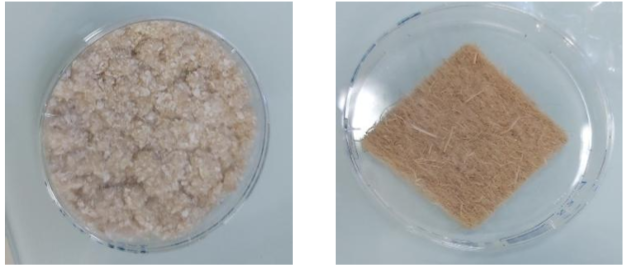
Image 2: Wood fibre and cellulose insulation samples
Results
Following incubation, the extent of fungal development on each sample is assessed visually using a standardized rating scale from 0 to 5.
- 0: No visible growth
- 5: Very significant growth
CONCLUSION
Froilabo refrigerated incubators provide the controlled conditions required to ensure consistent mold growth on Petri dishes. Their wide operating temperature range, from 0 °C to 100 °C, makes them well suited for cultivating microorganisms, which typically grow between 5 °C and 37 °C. Maintaining these cultures is essential for producing the quantities of microorganisms needed to carry out the tests.
Download assessing the mold resistance of biobased materials using a Froilabo incubator Application Note:
You can download the full Application Note as a PDF: Assessing the mold resistance of bio based materials